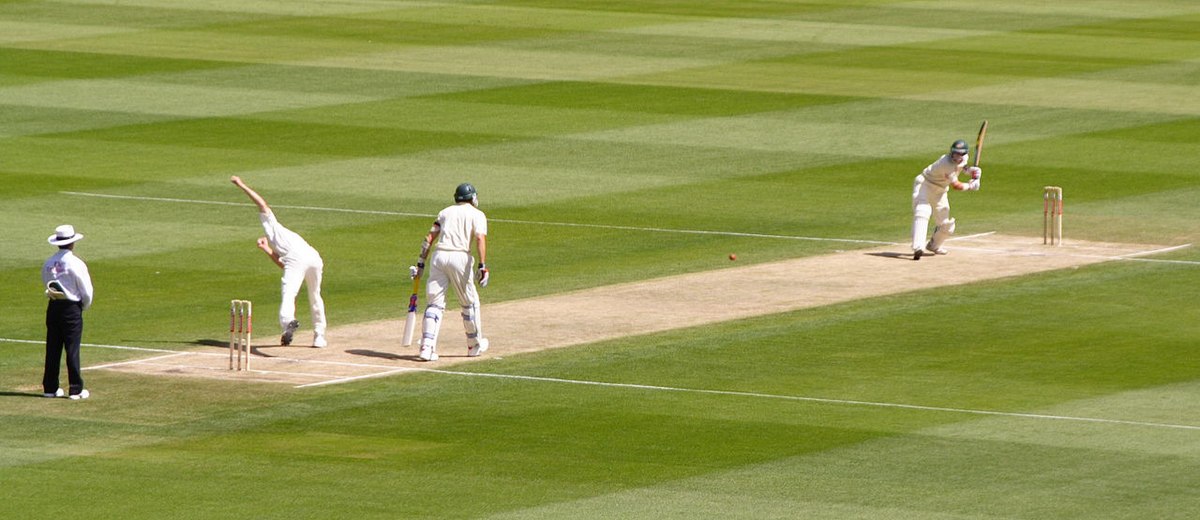
Cricket, often dubbed “the gentleman’s game,” is a sport steeped in tradition, rich in history, and revered across vast swaths of the globe. Whether played on a lush green pitch in England, under the sweltering sun of India, or on a serene field in Australia, cricket has an enduring appeal that transcends cultures, languages, and generations. Despite its relatively slow pace compared to modern, high-intensity sports, cricket’s charm lies in its complexity, strategy, and the unique atmosphere it creates between the players and their audience.
While the sport has evolved significantly over time, with faster formats and more accessible platforms for fans, it retains a sense of elegance and history that makes it distinct. It is a game of precision, patience, and flair, where mental fortitude often holds as much weight as physical prowess. From the unassuming village green to the iconic stadiums of global tournaments, cricket’s allure is undeniable.
A Brief History of Cricket
The origins of cricket date back to the 16th century in England, where it was initially played by shepherds in the rural countryside. The game, as it’s known today, began to take shape in the 17th century. By the 18th century, cricket had gained popularity, particularly among the British aristocracy, and was formalized with the creation of standardized rules. The establishment of the Marylebone Cricket Club (MCC) in 1787 became a turning point in the sport’s history, as it set the foundation for many of the rules that govern the game today.
Cricket’s spread beyond England’s shores can be credited to the British Empire, which introduced the sport to countries like India, Australia, the West Indies, and South Africa. In each of these nations, cricket was embraced, eventually becoming not just a sport, but a part of the national identity. The first official international cricket match took place between Canada and the United States in 1844, and since then, the game has only grown in prominence. Today, the International Cricket Council (ICC) governs the sport, overseeing global competitions and promoting cricket as a truly international game.
The Structure of the Game
Cricket can be somewhat daunting for newcomers due to its nuanced rules and varied formats. However, once one becomes familiar with the basic structure, the game reveals itself to be a beautifully orchestrated combination of individual skill, teamwork, and tactical brilliance.
At its core, cricket is a contest between two teams of 11 players each, played on an oval field with a rectangular pitch at the center. The main objective is for one team to score more runs than the other while defending against the opposing team’s attempts to do the same. There are three primary formats of the game: Test cricket, One Day Internationals (ODIs), and Twenty20 (T20) cricket.
Test Cricket is the oldest and most traditional format. Played over five days with each team having two innings, Test cricket is a true test of endurance, concentration, and strategy. It is a game of patience, where a batsman may spend hours on the crease, carefully accumulating runs, while bowlers aim to outwit the batsman with precise deliveries. Test cricket is often seen as the pinnacle of the sport, with its slow build-up and dramatic moments of intensity offering a narrative arc that unfolds over several days.
ODIs, on the other hand, are faster-paced games that are typically played over a set number of overs—50 per team. Here, the emphasis is on scoring quickly, and the strategy often revolves around balancing aggressive batting with controlled bowling. The limited overs format leads to higher stakes and more dramatic moments, where a single delivery can shift the entire game’s momentum.
T20 cricket, the shortest form of the game, has arguably revolutionized the sport, bringing it closer to the world of modern entertainment. With just 20 overs per team, this format is characterized by explosive batting, sharp fielding, and an adrenaline rush that keeps fans on the edge of their seats. The popularity of T20 cricket is undeniable, with major tournaments like the Indian Premier League (IPL) attracting millions of viewers and transforming cricket into a highly commercialized, global spectacle.
The Beauty of Strategy and Skill
What makes cricket stand out from many other sports is the balance it demands between individual brilliance and collective teamwork. Both batting and bowling are incredibly specialized skills, and mastery of these elements often leads to iconic performances that become etched in the history of the game.
Batting in cricket is an art form that blends technique, temperament, and flair. A batsman’s role is to accumulate runs while protecting the wicket, all while facing a barrage of deliveries designed to deceive and outfox them. The greats of the game—such as Sachin Tendulkar, Sir Donald Bradman, and Brian Lara—possess a rare combination of technical excellence and mental fortitude that elevates them above the rest. Tendulkar’s legendary cover drive or Lara’s majestic pull shot are examples of cricket’s aesthetic appeal, where every stroke is a graceful balance of power and precision.
Bowling, on the other hand, requires a deep understanding of both physics and psychology. The bowler’s goal is to outsmart the batsman by varying pace, length, and swing, all while maintaining control over their deliveries. Fast bowlers like Shoaib Akhtar and Brett Lee are celebrated for their sheer pace and intimidation, while spinners such as Shane Warne and Muttiah Muralitharan have carved their legacies with mind-bending variations in spin and flight. The duel between a batsman and a bowler, as each seeks to outwit the other, is one of the most fascinating aspects of cricket.
Fielding, though often overlooked, is another essential component of the game. A well-timed dive to stop a boundary, a sharp catch to dismiss a key batsman, or a quick run-out can all have game-changing consequences. Fielding requires agility, coordination, and an acute sense of awareness, as players must constantly anticipate the direction of the ball.
The Role of Cricket in Global Culture
Cricket is much more than just a sport; it is an institution, particularly in countries like India, Pakistan, Australia, and England. In India, cricket is almost a religion. The national team’s success in tournaments like the ICC Cricket World Cup creates a sense of unity and national pride that resonates far beyond the boundaries of the sport. Players like Kapil Dev, Sourav Ganguly, and Virat Kohli have become icons, and their achievements are celebrated with a fervor that rivals any national holiday.
The sport’s influence stretches beyond the playing field as well. Cricket serves as a vehicle for social change and is often used to bridge gaps in societies torn by political or cultural divides. In countries like South Africa, cricket has been a powerful symbol of reconciliation, particularly during the post-apartheid era, when players like Nelson Mandela used the sport to unite people from diverse backgrounds.
International tournaments, such as the ICC Cricket World Cup, continue to bring nations together, allowing players from different cultures and backgrounds to compete on the world stage. The camaraderie and sportsmanship that accompany these events remind fans that, at its heart, cricket is a universal language spoken across continents.
The Future of Cricket
As the sport continues to evolve, the future of cricket looks promising, albeit with its fair share of challenges. The rise of T20 cricket, particularly the lucrative IPL, has brought a fresh dimension to the game, attracting younger audiences and introducing innovative formats like the Hundred. However, some purists argue that this fast-paced version of the game risks overshadowing the more traditional formats like Test cricket, which require a deeper understanding and longer commitment.
Furthermore, the rise of technology in cricket—from the use of Hawk-Eye to monitor the trajectory of the ball, to the Decision Review System (DRS) in international matches—has altered how the game is played and officiated. These advances have made the sport more precise and transparent but have also led to debates about their impact on the traditional spirit of the game.
Despite these changes, cricket remains a timeless sport that combines athleticism with tradition, strategy with artistry. Whether one is watching the slow-burning drama of a Test match or the high-octane excitement of a T20 clash, cricket has an uncanny ability to captivate hearts and minds. It is a sport that celebrates both the individual and the collective, and it continues to thrive as a symbol of global unity, tradition, and passion.
In a world where the pace of life seems to accelerate by the day, cricket stands as a testament to the enduring power of patience, precision, and the quiet intensity that lies at the heart of competition.