Basketball is a game governed by precision, spatial awareness, and deeply ingrained habits. Whether you play in a recreational league or compete at a highly advanced level, minor deviations in your technique can lead to dropped passes, missed shots, and defensive breakdowns. Developing an elite skill set requires identifying these technical gaps and systematically fixing them through deliberate practice.
Many players unknowingly repeat structural errors because their focus is entirely on the outcome of a play rather than the mechanics behind it. By understanding the biomechanical and tactical errors that occur most frequently on the court, you can elevate your efficiency and significantly improve your overall value to your team.
Shooting Form and Mechanics Infractions
A basketball shot relies entirely on kinetic energy transfer from the floor up through the fingertips. When this chain breaks, shooting percentages drop dramatically.
The Flawed Guide Hand Interruption
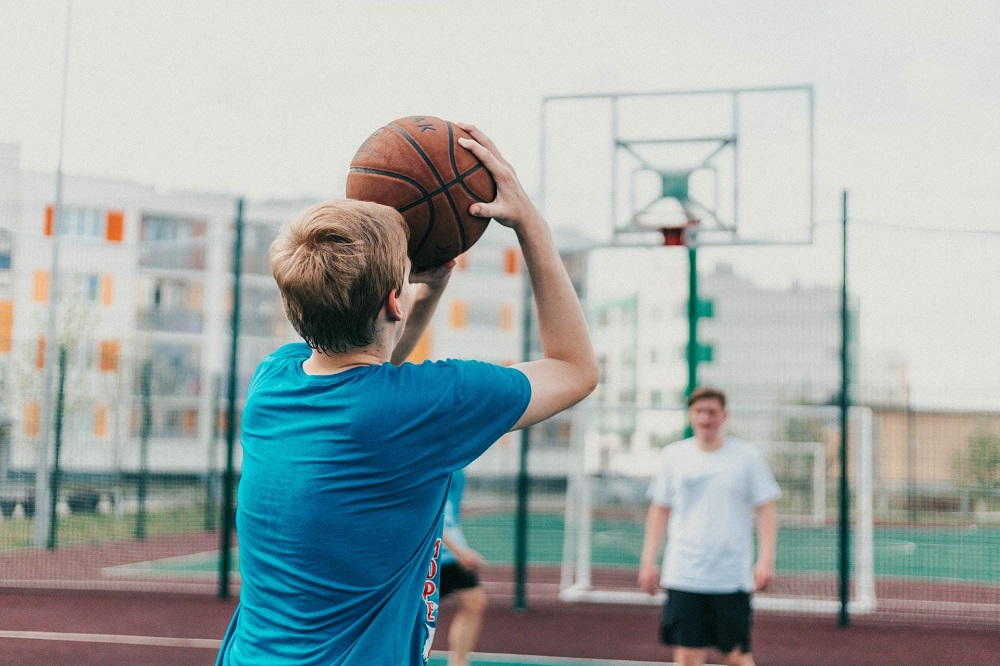
A frequent mechanical issue is the active involvement of the non-shooting hand during the release phase. The guide hand should purely serve to stabilize the basketball on the way up to the set point. Many players push the ball with their thumb or fingers from the guide hand, which introduces dual-axis rotation and forces the ball off a straight trajectory.
To correct this error, practice one-handed form shooting close to the basket. When you do return your guide hand to the ball, focus on keeping your non-shooting palm flat and leaving your thumb completely still. The guide hand should come off the ball right before the release point, leaving the shooting hand to finish the action independently.
Insufficient Leg Drive and Flat Arcs
Players often fail to realize that shooting distance is generated by the legs, not the upper body. When a shooter relies primarily on their arms, they tend to push the ball forward, resulting in a flat trajectory that minimizes the target area of the rim. A flat shot has a much lower mathematical probability of dropping into the hoop than a shot with a high arc.
To fix a flat arc, you must dip your hips and load your quadriceps prior to catching the ball. Release the shot on your way up, transferring that upward momentum directly into the basketball. Aim to launch the ball at an angle close to forty-five degrees, ensuring that it clears the front lip of the rim with plenty of room to spare.
Ball Handling and Distribution Errors
Effective guard play requires maintaining control of the ball while analyzing the moving pieces of the defense. Poor habits in this area quickly turn into transition opportunities for the opponent.
Staring at the Ball While Dribbling
Looking down at the basketball completely cripples your spatial awareness. A player who stares at the floor cannot spot an open teammate cutting to the basket, nor can they anticipate a secondary defender rotating over to steal the ball. This habit makes you incredibly easy to press and trap.
To break this habit, implement dribbling drills utilizing tennis balls or flashing lights that force your eyes upward. When practicing basic crossovers or between-the-legs variations, pick a target on the opposite wall and keep your eyes fixed on it. Over time, your nervous system will learn to rely entirely on tactile feedback to feel where the ball bounces, freeing your eyes to read the court.
Over-Dribbling and Forcing Play
Many players hold onto the ball for too long, destroying the rhythm of the offense. Dribbling without a specific purpose allows the defense to adjust, reset their positions, and close down driving lanes. Every bounce should serve a functional goal: advancing the ball, creating a clean passing window, or driving hard toward the rim.
To prevent over-dribbling, adopt a strict three-dribble limit during pickup games or practice scrimmages. Once you receive the pass, you have a maximum of three dribbles to make a decisive move to score or pass. This rule forces you to become highly efficient with your footwork and encourages faster ball movement across the perimeter.
Footwork and Positional Awareness Faults
Footwork serves as the literal foundation for every offensive and defensive action in basketball. Poor footwork leads directly to turnovers and easy scoring opportunities for the opposition.
Rushing the Pivot and Lifting the Foot
Travel violations frequently occur when a player catches a pass and immediately tries to make a move before securing their balance. Lifting or sliding the pivot foot prior to releasing the ball for a dribble is a basic mistake that halts offensive momentum.
To avoid traveling, practice establishing a strong drop step or jump stop immediately upon catching the ball. Explicitly declare your pivot foot by digging the ball of that foot firmly into the hardwood. Keep your center of gravity low, which gives you the stability to fake, sweep the ball, or pass without lifting that anchor foot.
Poor Defensive Closouts
When closing out on a perimeter shooter, players frequently sprint out in a straight, upright line. This leaves them highly vulnerable. A smart offensive player will simply use a shot fake, exploit the defender’s forward momentum, and drive right past them to the basket.
To execute a technically sound closeout, sprint hard for the first two-thirds of the distance, then transition into quick, choppy steps for the final third. Drop your hips into a low stance, choppily slide your feet to control your momentum, and contest the shot with one hand high while keeping the other hand low to deflect a potential drive.
Defensive and Structural Lapses
Individual scoring grabs headlines, but consistent defensive discipline wins games. Structural defensive mistakes sabotage even the most talented rosters.
Reaching Instead of Moving the Feet
When a ball handler changes direction, outmatched defenders often reach out with their hands to steal the ball rather than sliding their bodies laterally. This mistake regularly leads to cheap blocking fouls or allows the offensive player to easily blow past the defender’s hip.
To correct this tendency, focus your eyes entirely on the offensive player’s midsection rather than watching the ball. A player can fake with their head or the ball, but their hips cannot lie about their actual path of travel. Keep your hands wide, stay on the balls of your feet, and prioritize beating the offensive player to their preferred spot on the floor.
Failing to Box Out on the Rebound
Allowing secondary possessions via offensive rebounds is a massive blow to team morale. Many defenders simply turn around and watch the ball fly through the air instead of seeking out their assigned opponent and physically establishing inside position.
To eliminate this error, turn toward your opponent the absolute second a shot leaves the shooter’s hand. Make physical contact using your forearm, pivot completely around to seal them off with your lower back and glutes, and push backward to secure the inside space. Only after you have successfully pinned your opponent should you look up to track and grab the basketball.
Frequently Asked Questions
Why does my shot constantly hit the back of the rim?
Hitting the back of the rim typically indicates that your shot trajectory is too flat or you are pushing the ball too hard forward with your arms. When your shot lacks a high arc, it travels on a direct line into the backboard or the back iron. Focus on bending your knees deeper to generate vertical lift, and make sure your shooting elbow finishes high above your eyebrow on the release.
How can I stop picking up my dribble too early when pressured?
Players usually pick up the ball because they panic when a defender applies tight pressure. To stop this, widen your stance, turn your shoulder toward the defender to shield the ball with your body, and keep a live dribble active. Use your non-dribbling arm as a legal shield to protect the ball while scanning for an open teammate to bail you out.
What is the most effective way to defend a player who is much faster than me?
When guarding a faster player, cushion the distance by giving them an extra step or two of space. Do not play right up on their chest. Anticipate their driving lane by shading them toward the baseline or forcing them toward your secondary defensive help, using the sideline as an extra defender to limit their options.
How do I prevent rolling my ankles when landing after a rebound?
Ankle injuries frequently occur when you land off-balance on another player’s foot. To protect yourself, focus on landing with a wide, stable base, ensuring both feet touch the ground simultaneously with your knees slightly bent to absorb the impact. Avoid lunging blindly out of your area for a ball that is completely out of reach.
Why do I keep getting called for offensive fouls when driving to the rim?
Offensive charging fouls happen when a player drives completely out of control without reading the secondary defenders. If a defender establishes a legal marketing position before you leap, running into them results in a turnover. Work on developing a reliable pull-up jumper or a floating runner so you can score effectively without driving directly into the painted area every time.
How can I improve my passing accuracy when the defense plays in a tight zone?
Passing accuracy against a tight zone defense relies heavily on utilizing sharp ball fakes and looking away from your target. Zone defenders watch the passer’s eyes and arms to jump into the passing lanes. By faking a high pass, you force the zone to lift, which instantly opens up a clean bounce pass window underneath to a cutter.